


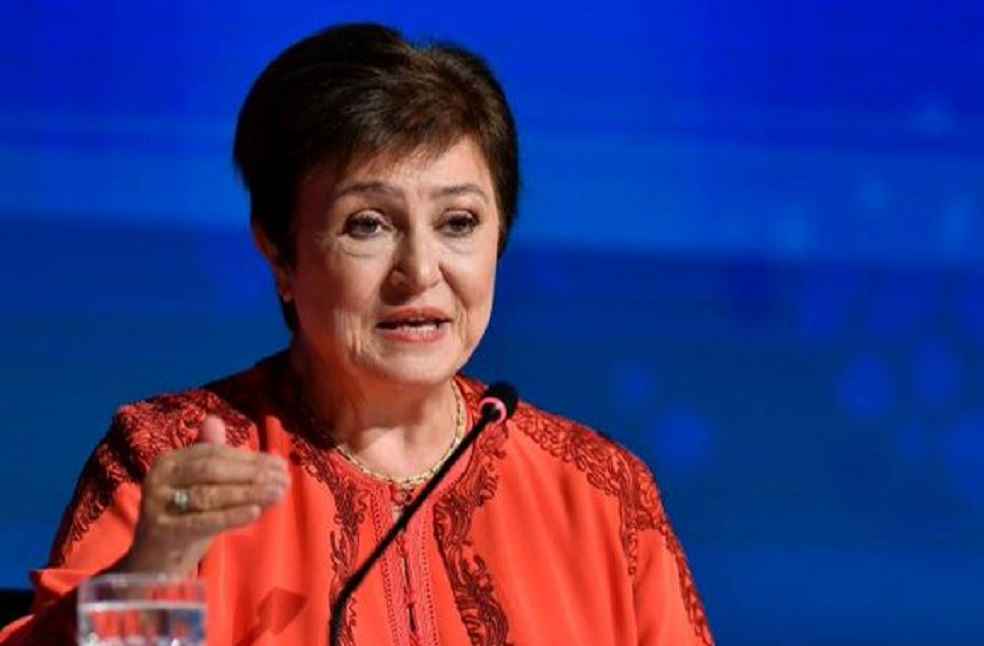
The global economy continues to show resilience despite recent trade shocks, although risks remain tilted to the downside, International Monetary Fund Managing Director Kristalina Georgieva said during a visit to Kyiv on January 15.
Georgieva said the IMF’s forthcoming World Economic Outlook update will reaffirm that trade disruptions have not derailed overall global growth, even as uncertainty persists. The update is scheduled for release on January 19, alongside the IMF and World Bank annual meetings in Washington.
“More of the same, that the world economy is remarkably resilient, that trade shock has not derailed global growth, that risks are more tilted to the downside, even if performance now is fairly strong,” Georgieva said while previewing the report.
She indicated that the Fund could again slightly revise its headline forecasts upward, following a similar move by the World Bank earlier in the week, but did not confirm specific figures ahead of publication.
The IMF has adjusted its outlook several times over the past year as economic data in major economies exceeded earlier expectations. In October, the Fund raised its 2025 global growth forecast to 3.2% from 3.0 %, while maintaining its 2026 projection at 3.1%. Markets will now watch closely whether the January update also lifts the 2026 outlook, which could ease concerns about a synchronized global slowdown.
At the same time, Georgieva stressed that near-term growth strength should not be confused with a durable and broad-based recovery. She highlighted geopolitical tensions and rapid technological change as the main sources of risk.
Rising strains between major trading partners could disrupt trade and investment flows, while heavy investment in artificial intelligence could lead to financial stress if expected productivity gains fail to materialize.

Georgieva said policymakers need to remain cautious even when headline growth appears stable. Central banks face the challenge of balancing lingering inflation risks against signs of economic resilience, while governments must preserve fiscal buffers to manage potential external shocks.
A sharper deterioration linked to renewed trade disruptions or underperforming technology investments could trigger sudden shifts in financial markets and interest rate expectations.
Her comments in Kyiv also came amid discussions on IMF financial support for Ukraine, underscoring how country-level lending priorities intersect with the Fund’s global economic assessments.
Analysts said the upcoming report will be closely scrutinized not only for headline growth projections, but also for how the IMF assesses risks tied to trade policy changes and the financial implications of rapid technological shifts.
POLICY & LAW | GJEPC Seeks Tax Reforms to Position India as Global Diamond Hub