


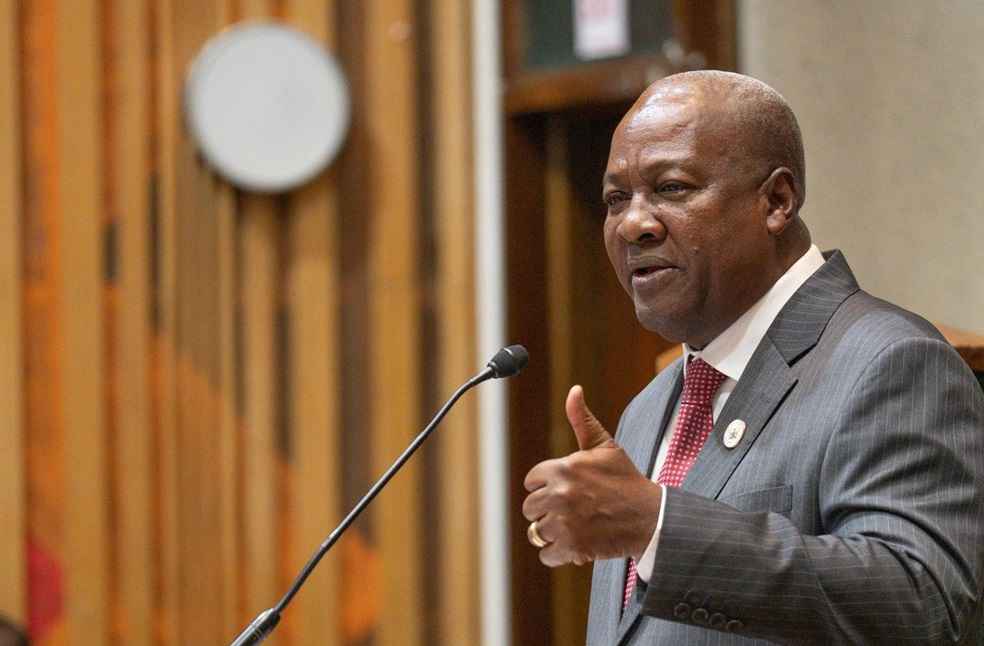
Ghana will purchase cocoa using its domestic currency and will ban the export of raw mineral ores by 2030, President John Mahama revealed on Saturday.
Mahama declared the decision in Addis Ababa at the conclusion of his high-level side event, ‘Accra Reset’s Addis Reckoning,’ held alongside the 39th African Union (AU) Assembly of Heads of State and Government.
He noted that a major decision is to end reliance on foreign funding for cocoa purchases, emphasizing that Ghana possesses sufficient cedis to finance its own cocoa.
The policy represents a major departure from decades of relying on external financing, which required Ghana to use cocoa beans as collateral for foreign loans.
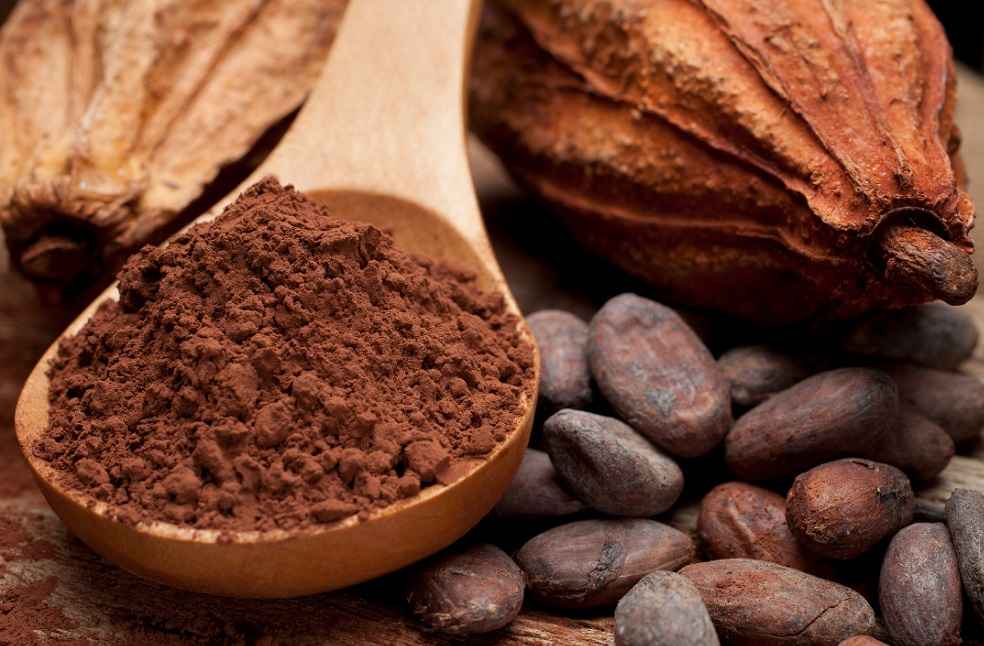
As the world’s second-largest cocoa producer, Ghana has depended on syndicated international bank loans for over 30 years to fund annual cocoa purchases. Mahama stressed that recent cocoa market crises revealed weaknesses in this system, including currency and price fluctuations.
Ghana has the capacity to process 400,000 tons of cocoa beans domestically, but current collateral requirements force the beans to be exported instead of being supplied to local processors. Under the new domestic bond financing plan, the need for collateralization will be removed, immediately freeing 400,000 tons for local processing to boost job creation and enhance value addition.
The president further announced that Ghana will cease the export of unprocessed minerals by 2030, mandating domestic processing of elements such as manganese, bauxite, and iron ore.
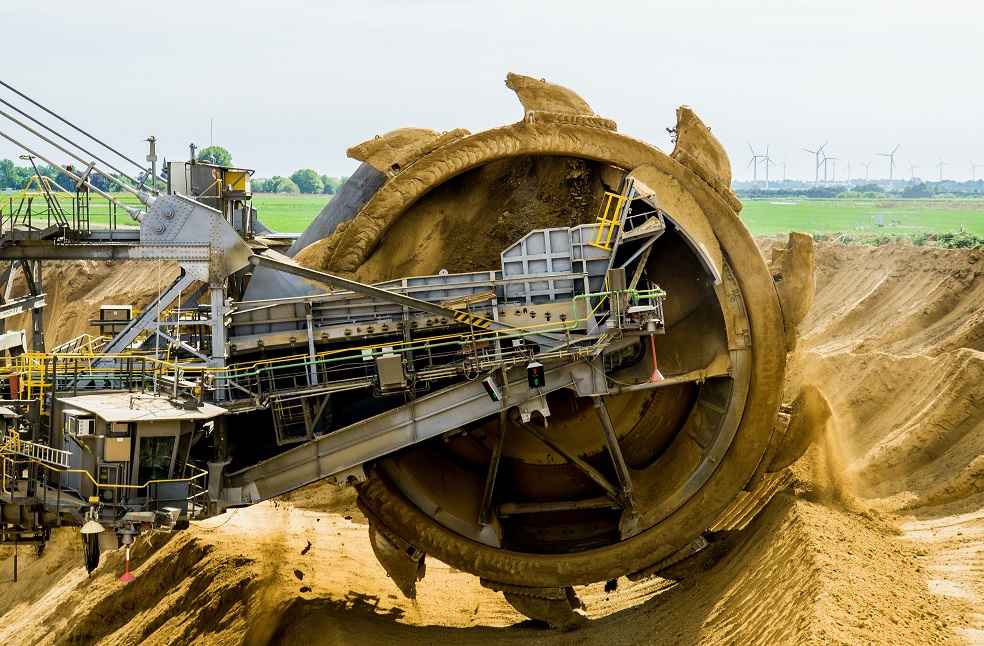
He emphasized that no raw mineral ores will leave the country under the new policy, which represents a significant step in Ghana’s industrialization agenda.
The mineral policy marks a significant step forward in Ghana’s longstanding industrialization efforts and carries important implications for mining companies operating in the country, as well as for investors in processing and refining infrastructure. Currently, Ghana exports substantial volumes of raw minerals that capture only limited value compared to refined products.
The government stated that starting with the 2026–27 season, at least 50% of all cocoa beans must be processed within Ghana, while all remaining beans from the 2025–26 season will be allocated for domestic processing.
POLICY & LAW | China Extends Zero-Tariff Access to Imports from 53 African Nations