


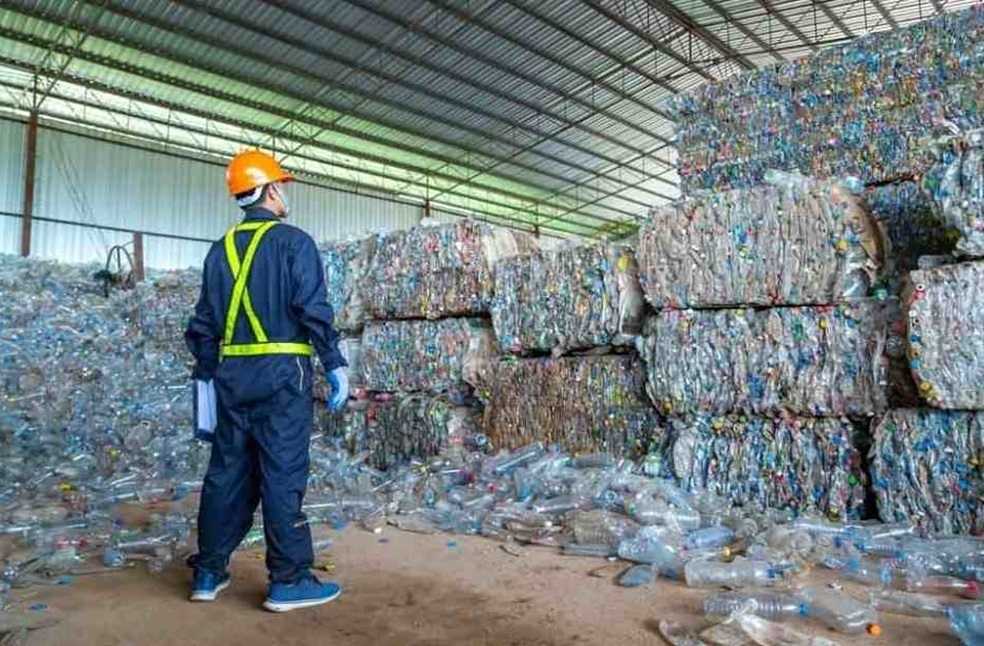
The European Union is planning inspections on imported plastics and introducing new measures to support its recycling sector, following a series of plant shutdowns caused by weak demand and low-cost imports, particularly from China, Financial Times reported.
The industry is in ‘deep crisis’ and “it’s important to make some changes now,” EU environment commissioner, Jessika Roswall, said.
She noted that 10 recycling plants had shut down in the Netherlands over the past 18 months. Across the EU, roughly 1 million tons of recycling capacity were lost during the same period, equal to France’s yearly output. In response, the EU intends to tighten oversight of imports and implement a new customs code to differentiate recycled plastics from virgin materials.

The EU’s proposals, expected Tuesday, would include inspections to ensure imported materials are recycled, steps toward a single waste market, and clearer rules for chemical recycling.
“There is an overflow of plastic coming in from third countries,” Roswall added.
Imports from China have continued despite EU anti-dumping duties introduced in 2024.
The European Commission will also urge all 27 member states to adopt a unified standard criterion when recycled material shifts from waste to a new product. This would simplify cross-border plastic shipments and boost industry efficiency.
The move is partly in response to a letter sent by six member states in November, including the Netherlands and France.

The letter stated that a number of European producers who invested in the sector’s transition to circularity, along with plastic recyclers, have been compelled to cut output or shut down plants. It called for strong incentives to boost the use of recycled materials and safeguards against imports.
EU plastics recycling capacity stood at 13.2 million tons in 2023 but is projected to decline by 1 million tons by 2025, according to the Commission. The plan also aims to tackle regulatory hurdles that have hindered progress in chemical recycling.
BUSINESS GENERAL | Asian Demand Drives New Growth For South African Citrus

