


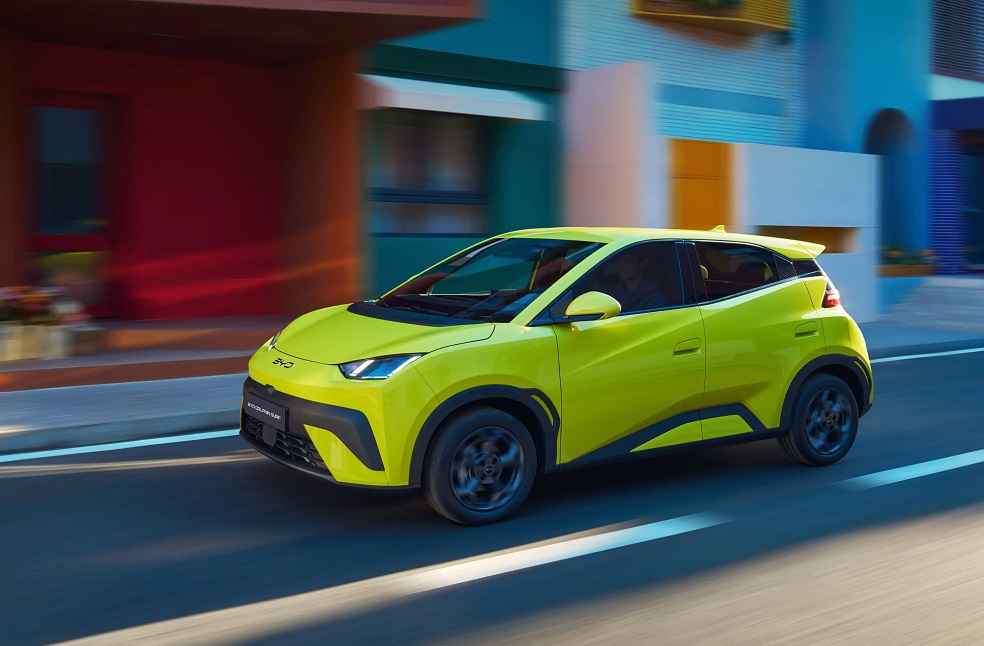
Chinese electric vehicle manufacturer BYD has sharply increased its European sales, reducing the gap with long-time market leader Tesla. The Shenzhen-based automaker recorded 24,963 new-car registrations in Europe in September.
Nearly five times the 5,013 units it sold during the same month last year, according to data from the European Automobile Manufacturers Association (ACEA). The association’s data covers the European Union, the UK, Iceland, Liechtenstein, Norway, and Switzerland.
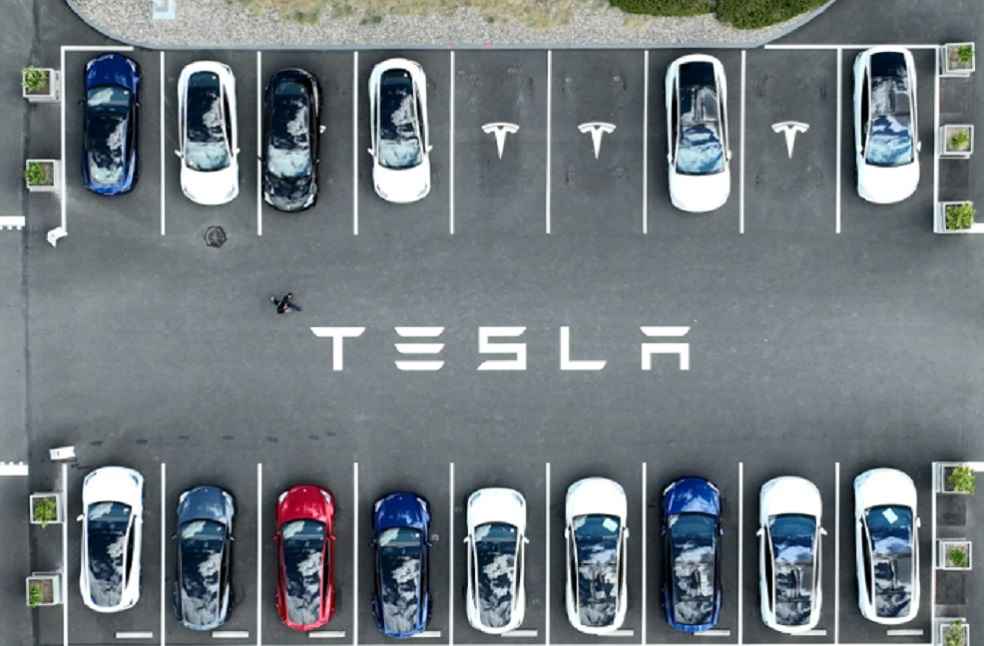
Tesla’s September sales in the region dropped by 10.5% year-on-year to 39,837 vehicles. Analysts say BYD’s rapid growth reflects the success of its globalization strategy.
“The numbers further proved that BYD’s internationalisation strategy is working well,” said Gao Shen, an independent Shanghai-based analyst. “As the world’s largest EV builder, BYD still needs to increase sales outside China to display its design and manufacturing capabilities.”
BYD has been accelerating its European expansion. The company plans to double its showrooms across the continent to 2,000 by 2026 and develop a complete local supply chain for its European operations, according to executive vice-president Stella Li, who spoke at the IAA Mobility conference in Munich.
The automaker now sells 13 models in Europe, up from six two years ago, and has announced that all its vehicles sold in the region will be locally produced by 2028.
In the first nine months of 2025, BYD’s new-car sales in Europe surged 300% to 120,859 units, while Tesla’s deliveries fell 28.5% to 173,694 units during the same period, ACEA data showed. Unlike Tesla, which produces only battery-electric vehicles, BYD’s European range includes both fully electric and plug-in hybrid models.
The company expects exports to account for about 20% of its global sales this year, up from 10% in 2024. It projects between 800,000 and one million deliveries outside mainland China in 2025, out of total estimated sales of 4.6 million units, said Li Yunfei, BYD’s general manager of branding and public relations.

To support this expansion, BYD has developed its own fleet of car-carrier ships, including eight large vessels capable of transporting up to 9,200 vehicles each.
Li added that BYD aims to offer its entire China-developed line-up to overseas markets as part of its global push. Despite slowing domestic demand, the company reported 396,270 total deliveries in September, down 5.5% year-on-year, while overseas sales jumped 116% to 71,256 units, making up 18% of total deliveries.
Analysts expect overall car sales in China, the world’s largest automotive and EV market, to soften in 2026. JPMorgan’s head of Asia-Pacific auto research, Nick Lai, warned that sales could drop by 3 to 5% if the Chinese government withdraws subsidies and tax incentives.
Chinese EV makers may find higher profitability abroad, with Lai estimating that manufacturers like BYD could earn profit margins of around 20,000 yuan ($2,817) per car overseas, four times the margin achieved in the domestic market.
METAL WORLD | Saudi Arabia Leads Surge in Chinese Steel Imports 2025