


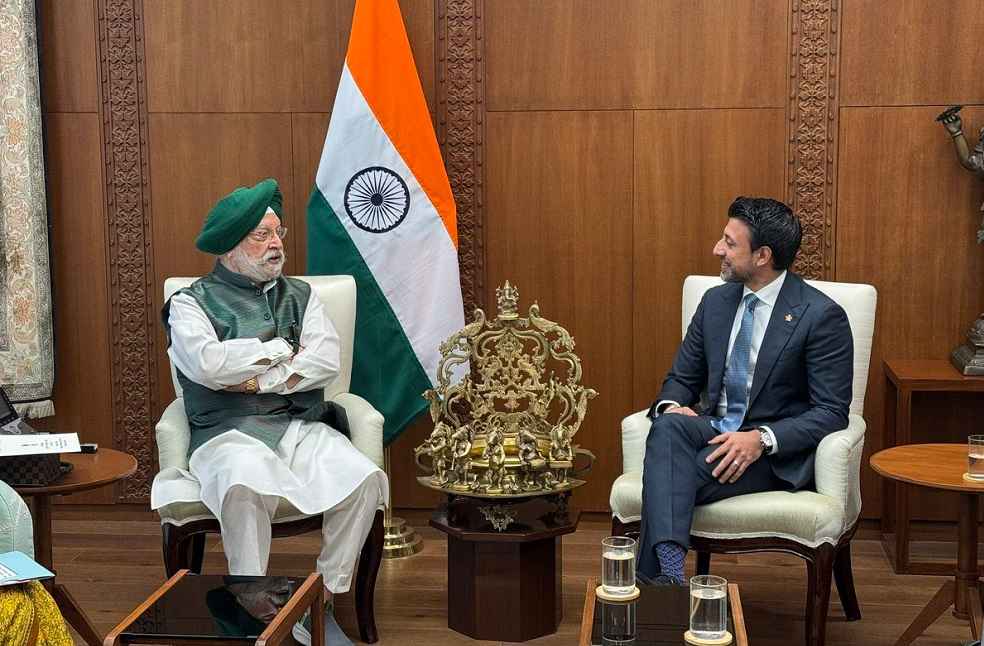
Canada’s international trade minister, Maninder Sidhu, began a three-day India visit on Wednesday to explore ways to advance bilateral trade and investment ties between the two countries.
According to the Canadian High Commission, Sidhu will promote Canada’s commitment to strengthening Canada–India commercial cooperation across sectors such as artificial intelligence, clean technology, and digital industries.
His discussions in India will focus on identifying new opportunities for partnerships that support workers and businesses in both countries. As part of the visit, Sidhu will travel to Visakhapatnam to participate in the Confederation of Indian Industry’s Partnership Summit on 14 November.
Sidhu said the visit would reinforce Canada’s efforts to diversify trade relationships and attract new investment. Highlighting India’s rapid economic growth, he noted that the country presents significant prospects for Canadian companies.

He said bilateral trade surpassed $30 billion in 2024 and added that the potential for further expansion remains strong.
He emphasized that deeper cooperation in areas such as energy, clean technology, artificial intelligence, and agriculture could unlock new commercial opportunities, spur innovation, and create more resilient and secure supply chains that deliver shared prosperity for both nations.
The Canadian High Commission described India as a key partner in Canada’s broader strategy to strengthen economic links across the Indo-Pacific region. In 2024, India ranked as Canada’s seventh-largest goods and services trading partner.
Canada’s commercial priorities in India are directed at policy-aligned sectors where it holds comparative strengths, including agriculture, digital industries, clean technology, and infrastructure.
Sidhu’s visit comes as both sides continue efforts to rebuild ties following a diplomatic dispute that strained relations. The relationship deteriorated after former Prime Minister Justin Trudeau alleged in 2023 that India may have been linked to the killing of Hardeep Singh Nijjar, an accusation India dismissed as “absurd”.
In response to Ottawa’s actions, India recalled its high commissioner and five diplomats, while Canada withdrew an equivalent number of its own.
The process of normalization began earlier this year, helped by Liberal Party leader Carney’s victory in the April parliamentary election. Both countries have since restored their high commissioners in each other’s capitals, signalling a steady move towards stabilizing the relationship.
IMEX SECTOR | Italian Pasta Faces Massive 107% U.S. Tariff Threat