
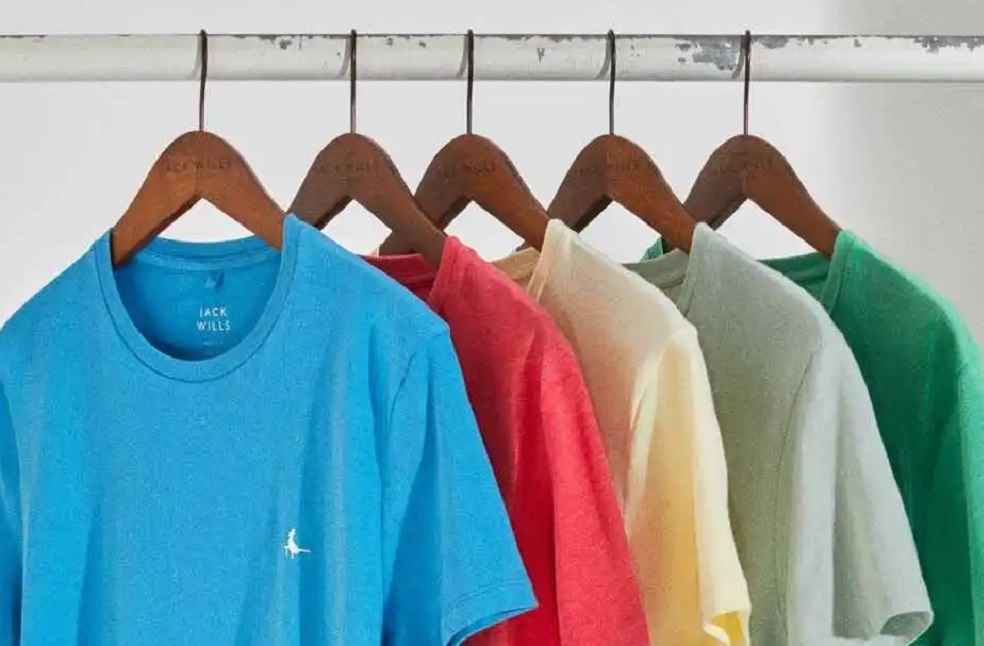
For the first time, Bangladesh’s T-shirt exports to the American market have topped those of long-time leaders Nicaragua, Honduras, and China, despite facing new U.S. reciprocal tariffs.
Data from the United States International Trade Commission (USITC) shows that in the first six months of this year, the U.S. imported T-shirts worth $3.52 billion from 117 countries. Of this, $373.2 million came from Bangladesh, surpassing Nicaragua’s $361.2 million.
From 1989 to 2024, the U.S. T-shirt market was dominated by Honduras, Nicaragua, Hong Kong, Jamaica, Mexico, and China, most of which enjoyed tariff benefits under trade agreements. On 2 April this year, the Trump administration imposed a minimum 10% tariff on imports from all countries, removing those advantages. Bangladesh successfully navigated this change to take the top position.
A second round of tariffs took effect on 7 August, applying varying rates by country. Bangladesh’s rate is now 20%, the same as Vietnam’s, but lower than India’s 50% and China’s 30%. Nicaragua faces 18%. Exporters believe Bangladesh remains competitively placed, though BGMEA president Mahmud Hasan Khan cautioned that weaker U.S. consumer demand could affect sales.

The U.S. is Bangladesh’s single largest export market, with total shipments worth $8.76 billion in FY 2024–25, including a wide range of apparel. In the first six months of the current year, the average price per T-shirt from Bangladesh was $1.76, higher than China’s ($1.63), Nicaragua’s ($1.65), and Pakistan’s ($1.50), but lower than Vietnam’s ($2.68), Honduras’s ($2.10), and India’s ($1.81).
Globally, Bangladesh is the second-largest T-shirt exporter after China. In FY 2024–25, it shipped $7.45 billion worth of T-shirts to 158 countries, with Germany ($1.05 billion) as the top destination, followed by Spain ($890 million) and the U.S. ($850 million).
According to NBR data, 811 Bangladeshi companies exported T-shirts to the U.S. last fiscal year. The largest was GAB Limited of Savar ($155 million), followed by SDS International ($71.8 million) and Ayesha Clothing Co. ($46.7 million).
POLICY & LAW | South Africa Unveils Five-Point strategy to Counter U.S. Tariffs