


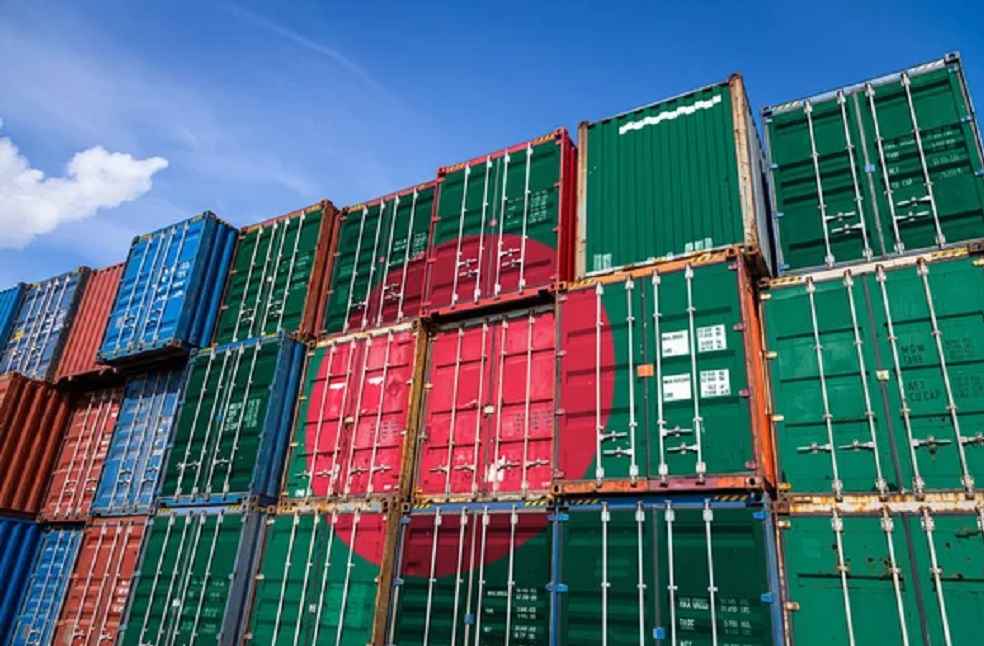
Bangladesh should broaden its export base within and beyond ready-made garments by moving into mid-tier technology sectors, according to Aditya Gahlaut, head of Asia for Global Trade Solutions at HSBC.
In an interview with The Daily Star during a recent visit to Dhaka, Gahlaut said exports are vital to the economy, not only for foreign currency but also for employment. He noted Bangladesh’s reliance on cotton garments even as global demand shifts towards man-made fibers. “There is obviously a need to diversify within the ready-made garment space, and there are markets which are unexplored, whether it is Southeast Asia or the Middle East,” he said.
Gahlaut argued that Bangladesh, like many Asian economies, must look beyond garments and develop low- to mid-tech industries. “Because, firstly, you have a comparative advantage in this sector and secondly, it generates employment.” He cited footwear, toys, machine tools, agricultural products, and bicycles as sectors that can deliver jobs and export growth with the right attention.

He pointed to high import tariffs as a long-standing brake on innovation in South Asia. “If you have a high import tariff and you protect domestic industry, what also happens is you prevent domestic industries from becoming efficient from innovating because they know they have some sort of protection.” While tariffs raise government revenue, he said, lowering them would ultimately make local firms more competitive.
Outlining a pathway to deeper manufacturing capability, Gahlaut referenced China’s evolution. “If you look at how China grew its manufacturing, it first focused on backwards participation, where producers import intermediate inputs and then use them to produce the final goods and then export.” Over time, firms mastered those technologies and shifted towards forward participation, making intermediate goods while final assembly moved abroad.
With Bangladesh due to graduate from the least developed country category next year, Gahlaut said free trade agreements will be essential to sustain growth, particularly in garments.

On the global outlook, he said tariffs have become central to short-term economic discussions. “We are now at a position where we see the dust settling a bit with multiple countries’ reciprocal rates already announced.” Uncertainty persists because not all sectoral tariffs are known. “When there is uncertainty, the one thing businesses do not do or corporates do not do is invest.”
He added that shifts in world trade predate recent U.S. reciprocal tariffs. “Twenty years back, a corporation’s decision to purchase from somewhere was based on one parameter, which was cost. It has changed during the last five years; supply chain decisions are made based on three parameters now. Efficiency is still one of them. Resilience is the second thing. The third thing is sustainability from a different lens.”
Gahlaut said supply chains are being reshaped by ‘China Plus One’, with firms reducing reliance on China by expanding production into other countries, an opportunity for Bangladesh. Demand-side resilience is also pushing companies to position closer to consumers, spurring partnerships, joint ventures, and contract manufacturing.

He highlighted the rapid expansion of trade in services, which he said is growing twice as fast as goods trade, as consumption shifts from products to services. For example, “people are not buying CDs anymore, but they subscribe to Apple Music, Spotify, etc. Ten years from now, people will consume a car instead of buying it. That is how the younger generation operates.” While tariff headlines dominate, long-term drivers of digitization, consumer behavior, and sustainability will continue to reshape commerce, he said.
As uncertainty clears, companies will need to diversify into new markets and build new relationships. European and U.S. firms want to remain linked to Asian supply chains, and Asian firms are looking outward. “In this situation, our ability to support them is much higher.”
Gahlaut said HSBC operates in 18 Asian countries and accounts for 90% of their trade flows, making it the region’s largest trade bank. “We are pretty strong in trade, and for us this is actually playing in our hands.” Banks, he added, play a key role in helping clients navigate uncertainty, with demand rising for receivables finance as companies hedge buyer risk.
He said HSBC has invested heavily in digital solutions, with most transactions now processed online. Tools such as HSBC TradePay and Supply Chain Finance reduce paperwork and speed funding, while digital lending based on e-commerce data is expanding to make cross-border trade faster, safer, and more inclusive.
ENERGY INDUSTRY | Indonesia’s Industrial Gas Supply Stabilizes After Disruptions